
Why the Center Matters
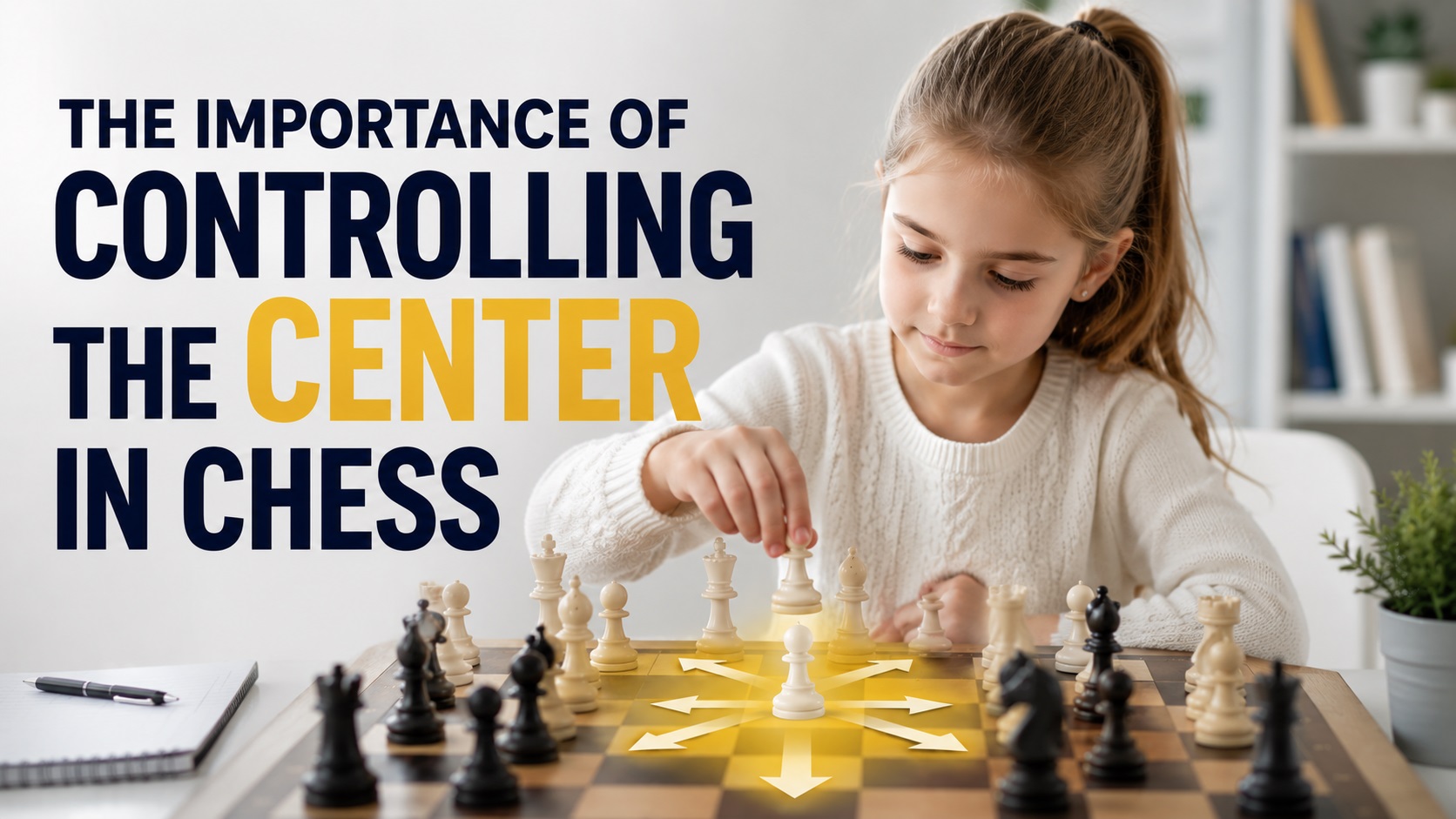
One of the first principles taught to chess players is the importance of controlling the center. The four central squares—e4, d4, e5, and d5—play a crucial role in almost every game. Players who establish influence over these squares often gain more freedom, better coordination, and greater control of the board.
Whether you are a beginner or an experienced player, understanding the value of the center can significantly improve your overall chess performance.
Greater Piece Mobility
Pieces placed near the center generally have access to more squares than pieces positioned along the edges of the board. A knight in the center can influence many more squares than a knight on the side, while bishops and queens can create pressure in multiple directions.
By controlling the center, players allow their pieces to become more active and effective.
Improved Board Control
The center serves as a gateway to both sides of the board. A player who controls central squares can more easily shift pieces from one area to another and respond quickly to changing situations.
This flexibility often creates opportunities to attack, defend, and adapt more efficiently than an opponent with limited central influence.
Stronger Development
Effective opening play usually focuses on developing pieces toward the center. When pieces occupy active central positions, they support one another and contribute to future plans.
Strong development combined with central control creates a solid foundation for the middlegame.
Creates Attacking Opportunities
Central control often leads to better attacking chances. Active pieces positioned near the center can quickly join attacks on either side of the board, making it easier to create threats and coordinate offensive plans.
Many successful attacks begin with strong central influence and well-placed pieces.
Limits Your Opponent's Options
Controlling the center not only strengthens your own position but also restricts your opponent's possibilities. When important central squares are occupied or influenced by your pieces, it becomes more difficult for your opponent to develop freely and execute their plans.
This can create long-term advantages and force opponents into less active positions.
Central Control Does Not Always Mean Occupying the Center
Many players assume that controlling the center requires placing pawns directly on central squares. While occupying the center is often effective, influence can also be exerted from a distance using pieces.
Different opening systems use different approaches, but the underlying goal remains the same: maintain influence over key central areas.
A Foundation for Strategic Play
Many strategic concepts in chess are connected to central control. Piece activity, space advantage, attacking chances, and positional planning often depend on who controls the most important squares.
Players who consistently pay attention to the center usually find it easier to create effective plans throughout the game.
Applying This Principle in Your Games
When starting a game, try to develop your pieces toward active squares and pay attention to central influence. Consider how each move affects the center and whether it helps improve your control over key areas of the board.
Over time, this habit will help you develop stronger positions and make better strategic decisions.
Conclusion
Controlling the center is one of the most important principles in chess. It improves piece activity, strengthens development, creates attacking opportunities, and limits your opponent's freedom. Regardless of skill level, players who understand and apply this concept will build stronger foundations and gain a deeper understanding of the game.
Mastering central control is not just an opening principle—it is a skill that influences every stage of the game.